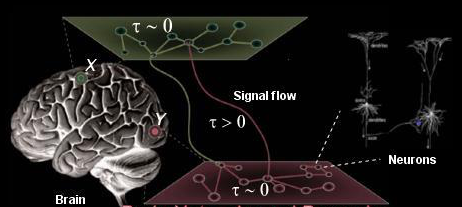
The brain is a living, adaptive network. Its nodes and connections coordinate activity to support perception, decision-making, creativity, movement, and memory. When these dynamic interactions are disrupted, neurological and psychiatric disorders can emerge.
This is why our work matters. Neurological conditions are now the leading cause of illness and disability worldwide, affecting more than one-third of the global population. Dementia affects about 57 million people, with Alzheimer’s disease contributing to most cases. Epilepsy affects tens of millions of people and remains difficult to treat because seizures arise from abnormal brain-network activity that can be challenging to localize. Stroke, depression, anxiety, epilepsy, Alzheimer’s disease, and other brain disorders demonstrate that clinical symptoms often arise not from a single isolated brain region, but from disrupted communication across distributed brain networks.
The NeuroPhysics program at Georgia State University, led by Dr. Mukesh Dhamala, seeks to uncover the fundamental rules that govern these brain node and network dynamics. We combine physics, neuroscience, brain imaging, electrophysiology, computational modeling, and data-driven analysis to understand how brain networks function, adapt, and break down. This fundamental knowledge is essential for clinical translation: it can turn brain signals into biomarkers, models into predictions, and scientific discoveries into better tools for diagnosis, monitoring, treatment, and patient care.